
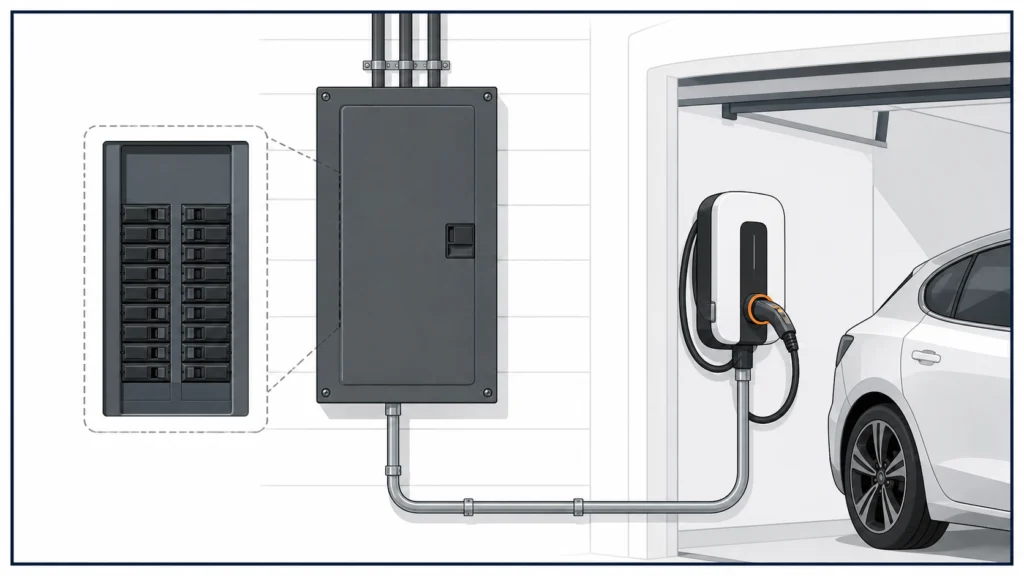
Can your electrical panel support a Level 2 EV charger?
A Level 2 EV charger adds a serious new electrical load to a home. Your panel may be ready for it, or it may need changes first. The only honest answer comes from looking at the whole electrical system, not from the charger label alone.
For a homeowner planning an EV purchase or a home charger in Columbia or Mid-Missouri, that assessment belongs near the start of the conversation. It helps you choose the right path before a charger, circuit, or parking setup locks you into the wrong plan.
Key takeaways
- A Level 2 charger uses a 240-volt circuit. It needs more than an open spot in the panel.
- Panel capacity depends on the home’s existing demand, the service rating, the condition of the equipment, and the charging equipment you plan to use.
- Some homes need a dedicated circuit. Others need a larger change. A qualified assessment sorts that out before work starts.
Why the panel matters before you pick a charger
Level 2 charging is popular because it can charge a vehicle at home on a 240-volt circuit. The U.S. Department of Energy’s Alternative Fuels Data Center explains the difference between home charging options and the equipment involved. That is useful background, but it does not answer whether a specific home can carry the added load.
The charger is one part of a larger system. Your electrical service already supports lighting, appliances, heating or cooling equipment, outlets, and whatever else is connected to the home. Adding EV charging means checking how that new demand fits with the rest of the picture.
It is tempting to focus on the panel door and count unused breaker spaces. That can be misleading. An empty space does not prove the panel has capacity for a new 240-volt circuit. The service rating, the loads already calculated for the home, and the condition of the equipment matter too.
What a panel-capacity assessment looks at
An assessment starts with the electrical equipment that is actually installed. The goal is to understand what the home has now and what the charger will ask it to do.
- Service and panel rating. The rating on the service equipment gives part of the starting point. It is not the whole answer.
- Existing electrical demand. Major appliances, HVAC equipment, electric heat, water heating, cooking equipment, and other loads all affect the calculation.
- The charger and vehicle plan. Different charging equipment has different requirements. The right circuit depends on the equipment selected and how the vehicle will be used.
- Available panel space and equipment condition. A crowded, damaged, or outdated setup may call for a different conversation than a modern panel with clear capacity.
- The route to the parking location. Garage, driveway, detached garage, and outdoor locations each change the practical work. Distance, walls, trenching, and where the charger will be mounted all affect the scope.
This is why an EV charger quote should begin with a few real details. A photo of the panel, the planned parking location, and the charger or vehicle information can make the first conversation more useful. Pinnacle can then confirm the next available scheduling option for a closer look.
Does every home need a panel upgrade?
No. Some homes can add a properly planned dedicated circuit without replacing the panel. Others may need equipment changes before a Level 2 charger makes sense. The assessment is what separates those two situations.
That distinction matters. A panel upgrade is not a default upsell, and skipping the evaluation is not a shortcut. The right recommendation should follow the home’s actual demand and the charging setup you want to install.
Planning early also gives you more options. If an EV purchase is months away, you can assess the panel, decide where the charger should live, and understand the scope before the vehicle arrives. If you already own the vehicle, the same questions still apply. The work simply needs to start with the equipment that is there today.
Questions to answer before requesting a charger quote
You do not need to solve the electrical design on your own. A few practical details will help the conversation move in the right direction.
- Where will the vehicle usually park?
- Do you already have a charger in mind, or do you need help understanding the options?
- Can you share a clear photo of the panel and the area where you want the charger?
- Are there other planned electrical changes, such as a remodel, new HVAC equipment, or an electric appliance?
- Would the charger be indoors, outdoors, or in a detached structure?
The ENERGY STAR EV charger guide is a useful place to compare charger features before the electrical work is scoped. Keep the product decision and the panel assessment connected. A charger that looks right on a product page may still need a different circuit plan at your home.
Start with a clear capacity check
Home EV charging should feel convenient, not mysterious. The cleanest path is to confirm the panel, choose a charger and location that fit the home, then plan the installation around the real conditions.
If you are considering home charging, request an EV charger quote from Pinnacle Electric and ask whether the panel needs a capacity assessment first. A photo of the panel and the parking area is a good place to begin.
Common questions about Level 2 charging and panel capacity
Can an open breaker space support an EV charger?
Not by itself. An open space may be useful, but the service capacity, existing demand, equipment condition, and charger requirements still need review.
Can I install a Level 2 charger myself?
EV charging equipment connects to a home’s electrical system and should be planned around the actual equipment and local requirements. A professional assessment avoids guessing about the circuit, panel, or installation route.
What should I send before a panel assessment?
A clear photo of the panel, the charger or vehicle information you have, and a photo of the planned parking location give an electrician a better starting point.